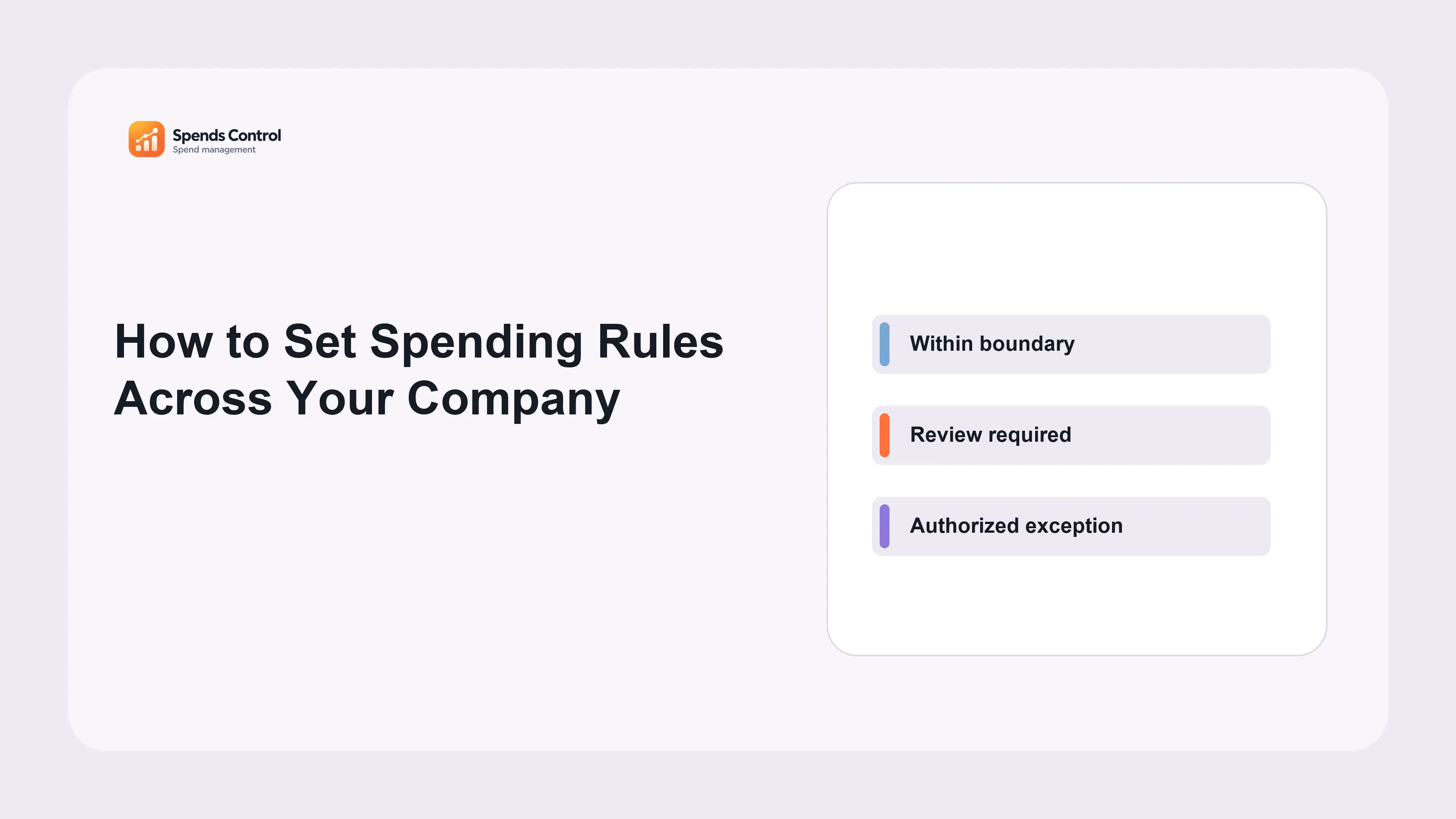
“Simple rules help people make confident decisions.” Spending rules become confusing when managers use different limits and employees cannot tell which purchases need approval. Urgent work then gets delayed or people buy outside the process. This guide explains how to write clear rules that people can follow. An organized approach tells everyone what information to provide, who can decide and how to handle an exception. Good rules support useful work while keeping spending under control.
Make each rule answer a real decision
Begin with the purchases that regularly create confusion. Do employees need approval for a new subscription? Who can increase seats or service limits? What happens when a renewal price changes? Write rules around those events rather than starting with a broad instruction to “spend responsibly,” which gives different colleagues little shared guidance.
We recommend starting with clear records and a simple routine. For each event, explain the details needed, who can decide and what happens next. A new tool might need purpose, expected users, estimated cost and an owner. An increase in seats might need current assignments and the change in cost. A renewal change might require the agreement, notice deadline and confirmation that the service is still needed.
Use plain language and an example. “Submit a request before purchasing a new subscription” is clearer than an unexplained policy label. Connect the rule with the request workflow employees will actually use. If the normal route is not available or cannot meet the timetable, the rule should point to an agreed exception process.
A practical review checklist
- State which event triggers a request.
- Define the information and authority required.
- Provide an accountable route for urgent exceptions.
Define authority and limits consistently
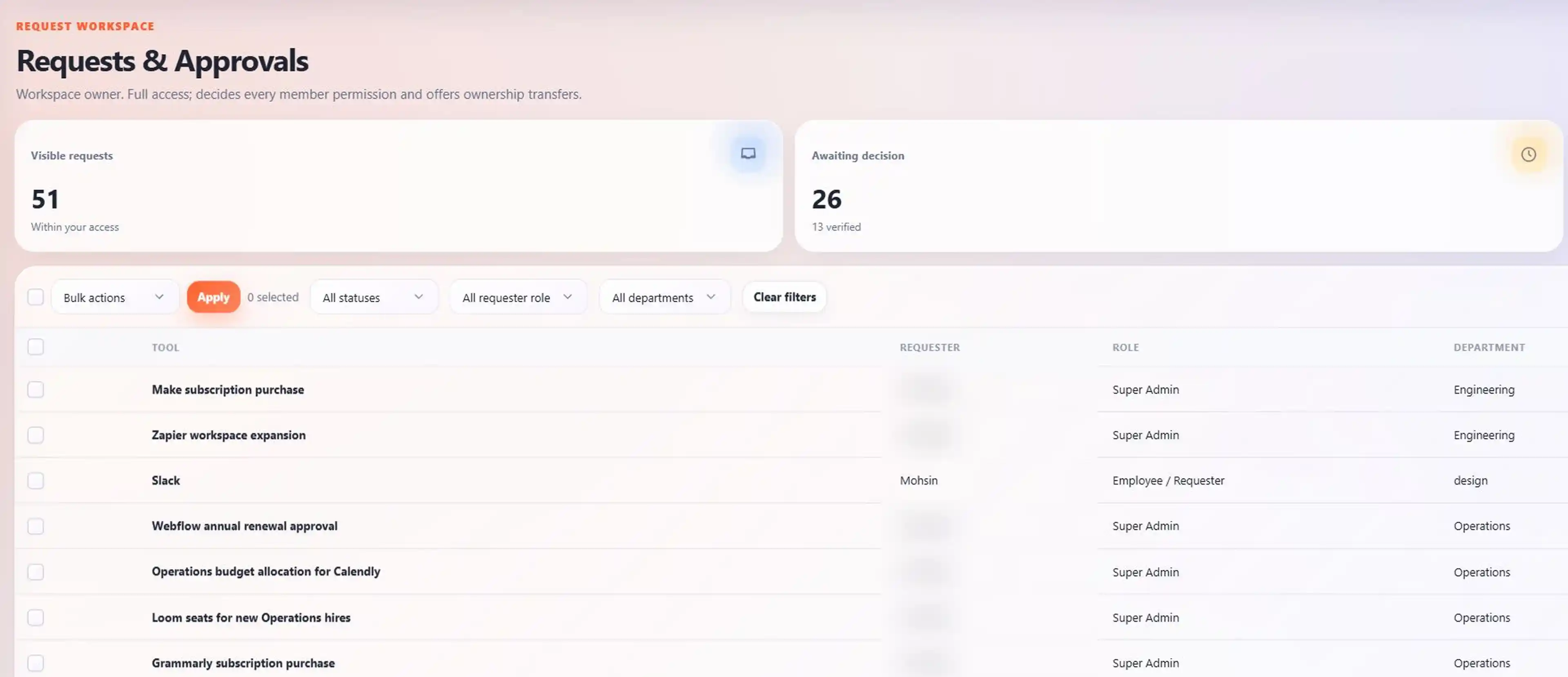
Explain who can request, check and approve. These actions do not automatically belong to the same role. Someone can confirm that a proposal is complete without having final purchasing authority. Record the distinction so a checked request is not interpreted as permission to buy and an administrator is not assumed to approve every expense.
Choose boundaries appropriate to the business, considering amount, recurring cost and business risk. State whether a limit concerns a single payment, annual future cost or total period spending. Otherwise, a subscription billed monthly can look minor while creating a much larger annual cost than the rule intended to allow.
Match written rules with actual product permissions in Admin & Settings. In the available software purchase workflow, final approval rests with the Super Admin; do not promise arbitrary approval chains that are not available. If your company policy requires additional review, describe how that review is confirmed without claiming that a separate permission exists.
Address shared services and budget exceptions
Define how teams propose a shared service and who coordinates its ownership. Several departments using one contract should not create several incompatible rules for changing it. Record participating teams and the role that prepares the purchase decision. Consider the whole service dependency before a local manager reduces seats or service limits or proposes cancellation.
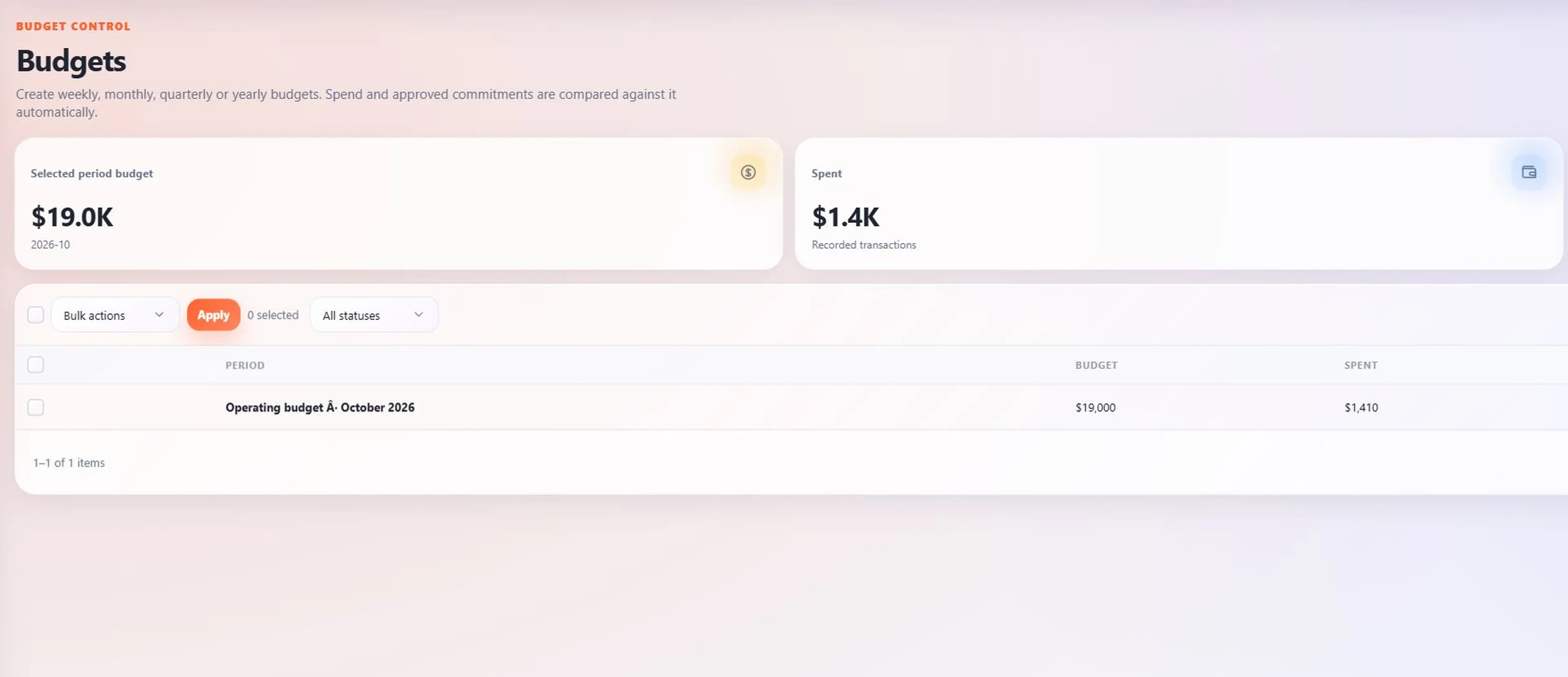
Explain the financial check before approval. A budget must be considered with recorded spending and outstanding approved purchases. Budgets distinguishes those stages within a period, but the company must still define how its internal review responsibilities apply. State assumptions rather than treating a partial record as a complete financial position.
For exceptions, require the reason, person allowed to decide and follow-up. An urgent purchase may be necessary, but urgency should not erase the service owner or purchase records. Keep exceptions reviewable and look for patterns. Repeated emergency requests can indicate that the standard route is unclear or that reviews are happening too slowly.
Communicate the rules and keep them usable
Publish a short simple version where people make requests. Give managers a consistent explanation and employees a clear route for questions. Use examples covering a new subscription, a change in seats and a renewal. A rule that people can explain back is more likely to be followed than a document acknowledged once and forgotten.
At Spends Control, we recommend giving each open task an owner and a review date. Check the rules against ordinary work after putting it in place. Are requesters supplying the required information? Do reviewers use it? Are exceptions being resolved? If a requirement repeatedly produces irrelevant material, simplify it. Rules should keep authority and context while allowing reasonable decisions to move through the company.
Update the rules when responsibilities or team needs change, and identify the current version. Keep older decisions understandable under the rules that applied at the time. The company spending policy guide explains how to bring the boundaries, responsibilities and exception route into one maintained document rather than scattering instructions across messages.
To build on this routine, read our guides to writing a spending policy, building a spending process and team spending control. Choose the next topic that matches the problem your team needs to solve.
Frequently asked questions
Can verbal approval satisfy a spending rule?
Only if your company allows it. Write down who approved the purchase, when they approved it and any conditions, so others can check the decision later.
Should contractors follow the same rules as employees?
Explain which rules apply to contractors. Give them only the access and buying authority needed for their work; do not assume they can approve a purchase.
What if a purchase is split into smaller payments?
Review the full purchase, not just each small payment. Several instalments may still add up to a large cost that needs approval.
How should a rule change be announced?
Tell people what changed, when it starts and where to find the current rules. Give them a clear person or channel for questions.
What if two rules seem to conflict?
Ask the person responsible for the policy before buying. Record the answer and update the wording so others do not face the same confusion.