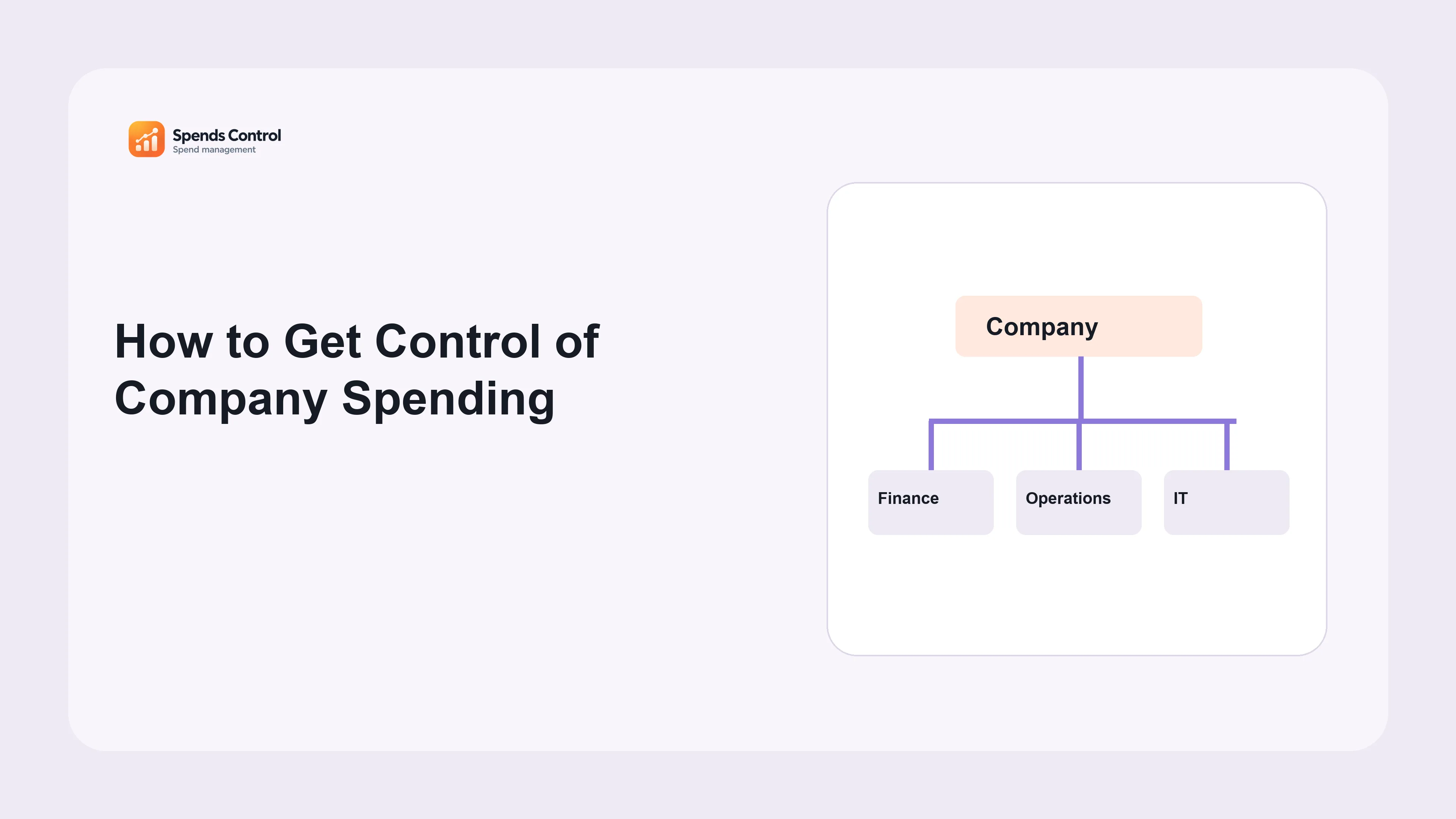
“Shared records turn scattered costs into clear decisions.” Company spending becomes hard to follow when every department keeps its own list and uses different rules. Finance sees charges, managers know the tools, and nobody has the full picture. This guide shows how to bring that information together. An organized company routine gives each service an owner and each purchase a clear route. You can then review costs across the business without making every small decision slow.
Define the company-wide picture
Start by deciding what the review covers. Software, digital services, infrastructure and related contracts form a manageable scope. Do not pretend that a digital service service list automatically covers payroll, stock purchases or every business expense. A clear boundary prevents leadership from treating a partial view as the complete financial position.
We recommend starting with clear records and a simple routine. Agree common fields across departments: service, supplier, purpose, owner, department, amount, currency, billing schedule and renewal and notice dates. Keep the definitions stable. One team’s annual cost should not appear beside another team’s monthly charge without a clear label. Record the source and last checking date for details that may change.
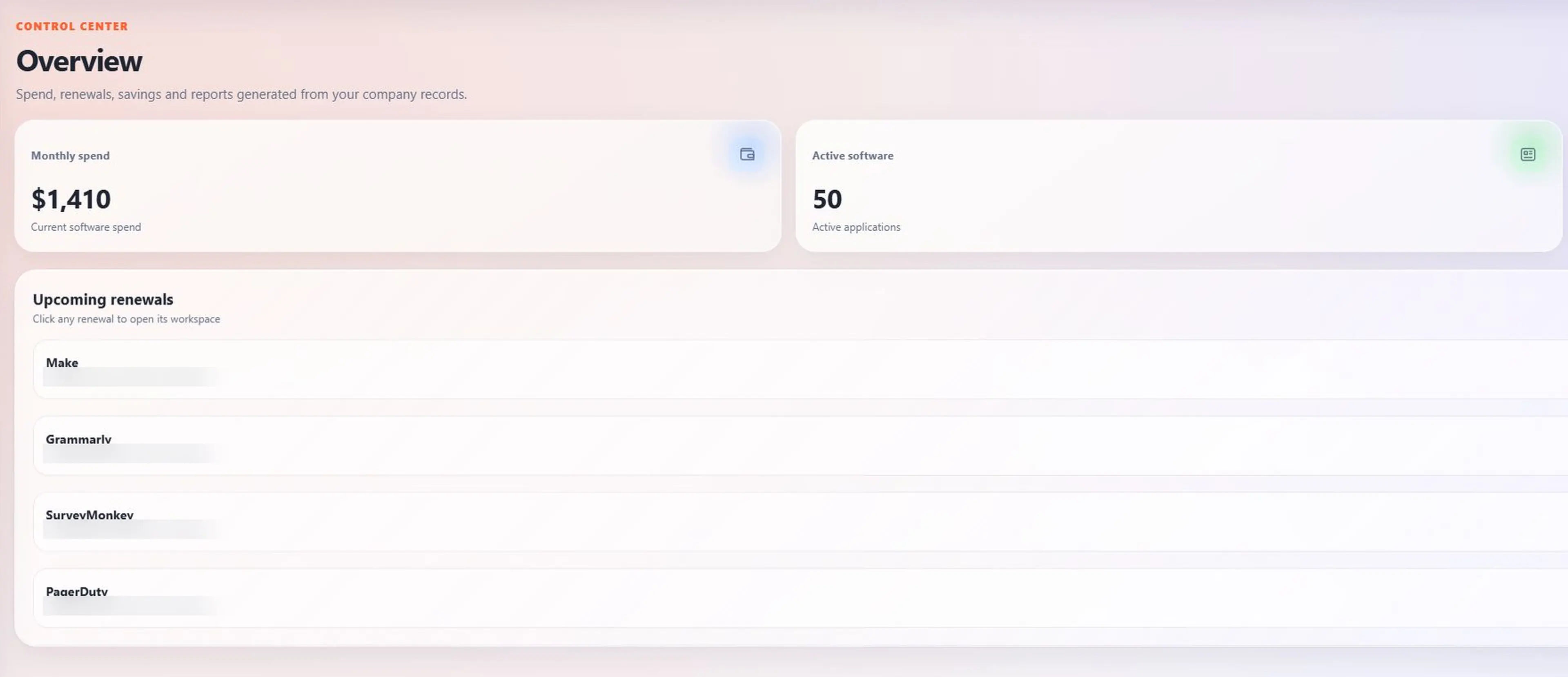
Use the application inventory as the service reference and connect recorded costs with their context. Identify shared services separately from department-specific purchases. If several teams use one contract, make clear whether costs are centrally held or allocated for discussion, so the same agreed purchase is not presented several times in the company total.
A practical review checklist
- Define which agreed purchases the company review covers.
- Use consistent fields across departments.
- Identify shared services before consolidating totals.
Assign responsibility without confusing authority
An service owner explains why the company needs a service. A budget owner checkes budget amount. An administrator maintains access, and an approved approver decides whether a purchase can proceed. These responsibilities may belong to one person in a small company, but they are still different tasks and should remain understandable.
Document what each role must do when a service changes. A departure should trigger an ownership and access review; a price change should trigger purchase updates; a new contract should establish its next notice window. Without those triggers, even an accurate initial service list becomes stale while the business continues spending against it.
Keep permissions aligned with responsibility through Admin & Settings. Do not assume that maintaining records grants final purchasing authority. Review access during handovers, and keep the business reason behind important changes. Another colleague should be able to follow the record without relying on the original owner’s personal inbox or memory.
Connect department decisions to company agreed purchases
Ask departments to submit proposed spending with an estimated cost, business reason and required date. Consolidate those proposals with existing budget amounts and known future costs before approval. A company can appear below its recorded spend limit while already having enough approved but unfulfilled requests to use the remaining budget amount.
Budgets distinguishes a budget from recorded spend and approved purchases. Use the same period in your company discussion, and clearly explain any annual costs or expected changes. If department-level budget amounts are tracked separately, keep their calculation method explicit rather than claiming that every summary automatically represents a departmental budget.
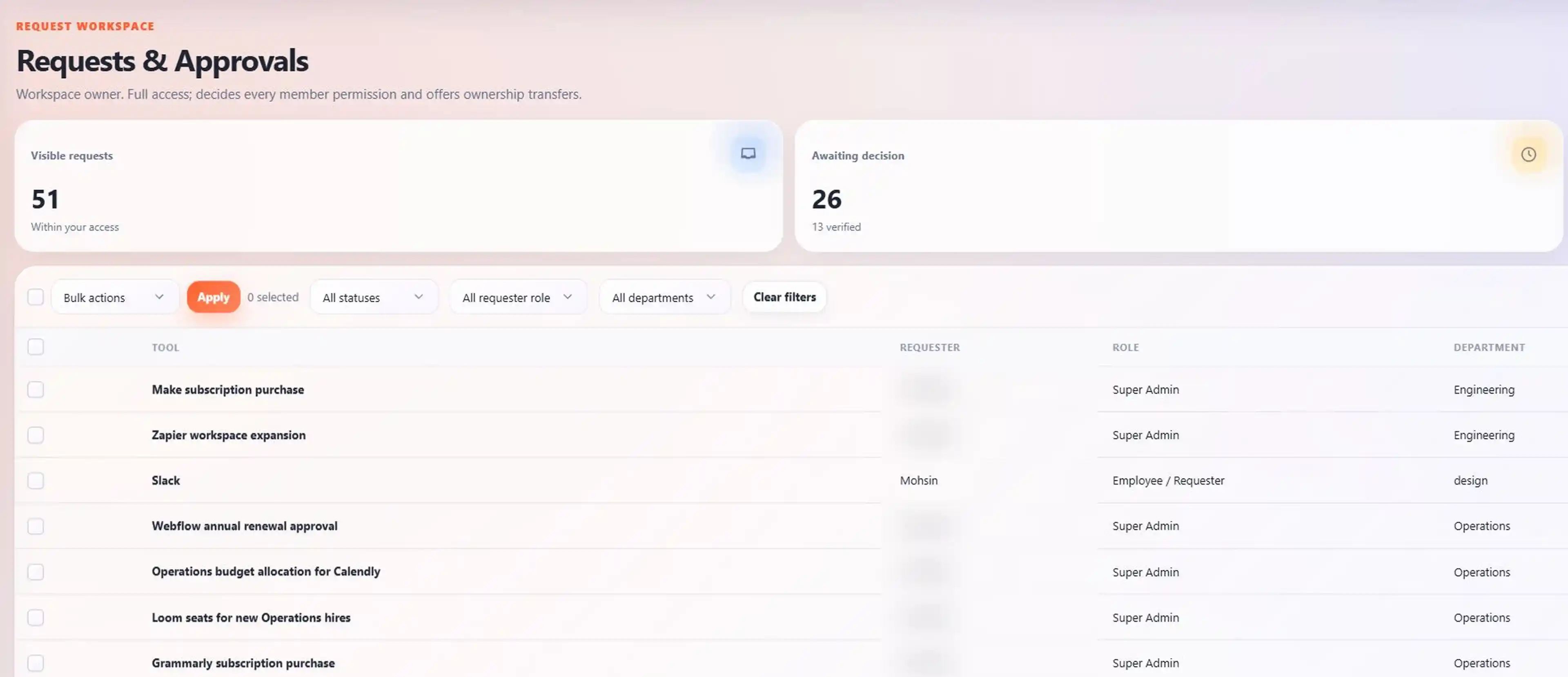
Requests & Approvals keeps the request and recorded decision. Ensure that the eventual purchase is connected to the relevant records. This gives leadership a useful question to ask: which agreed purchases are already approved, which still need a decision and which have become actual transactions? Each answer describes a different stage of company spending.
Make the review repeatable across the company
Hold a focused review around exceptions and upcoming decisions. Departments should arrive with unexplained charges, approaching notice dates, material changes and requests requiring authority. Avoid reading every row aloud. A consistent record enables the meeting to concentrate on the decisions that genuinely need cross-company coordination.
At Spends Control, we recommend giving each open task an owner and a review date. End each issue with a person responsible, next action and date. Keep the decision reason, especially when a shared service is retained despite apparent overlap. The cheapest option may not meet daily work requirements, and a cancellation may affect several departments. Commercial changes should follow the agreement and approved decision process.
Measure whether the company picture is becoming more reliable: fewer ownerless services, fewer unresolved charges and more decisions prepared in time. Do not judge the process only by a lower total, because growth can legitimately increase spending. The finance team workflow shows how connected records support accountable reviews while keeping estimates and actual outcomes distinct.
To build on this routine, read our guides to team spending control, common spending problems and writing a spending policy. Choose the next topic that matches the problem your team needs to solve.
Frequently asked questions
Who should lead a company-wide review?
Choose someone who can bring finance and department owners together. Each service owner should still explain what their team needs and uses.
What if a shared service has no single department owner?
Name one person to coordinate the service and list the teams using it. Shared use should not mean nobody takes care of the next decision.
Can local managers retain flexibility?
Yes. Give managers clear limits and explain which purchases need another review. This is easier to follow than asking for permission each time.
How should an acquisition or reorganization be handled?
Check owners, agreements and service use before combining the lists. Similar tool names do not always mean the purchases can be treated as one.
What makes a company summary trustworthy?
Use the same fields and current source records. Show which costs are included and which details are still missing, so readers know what the summary covers.