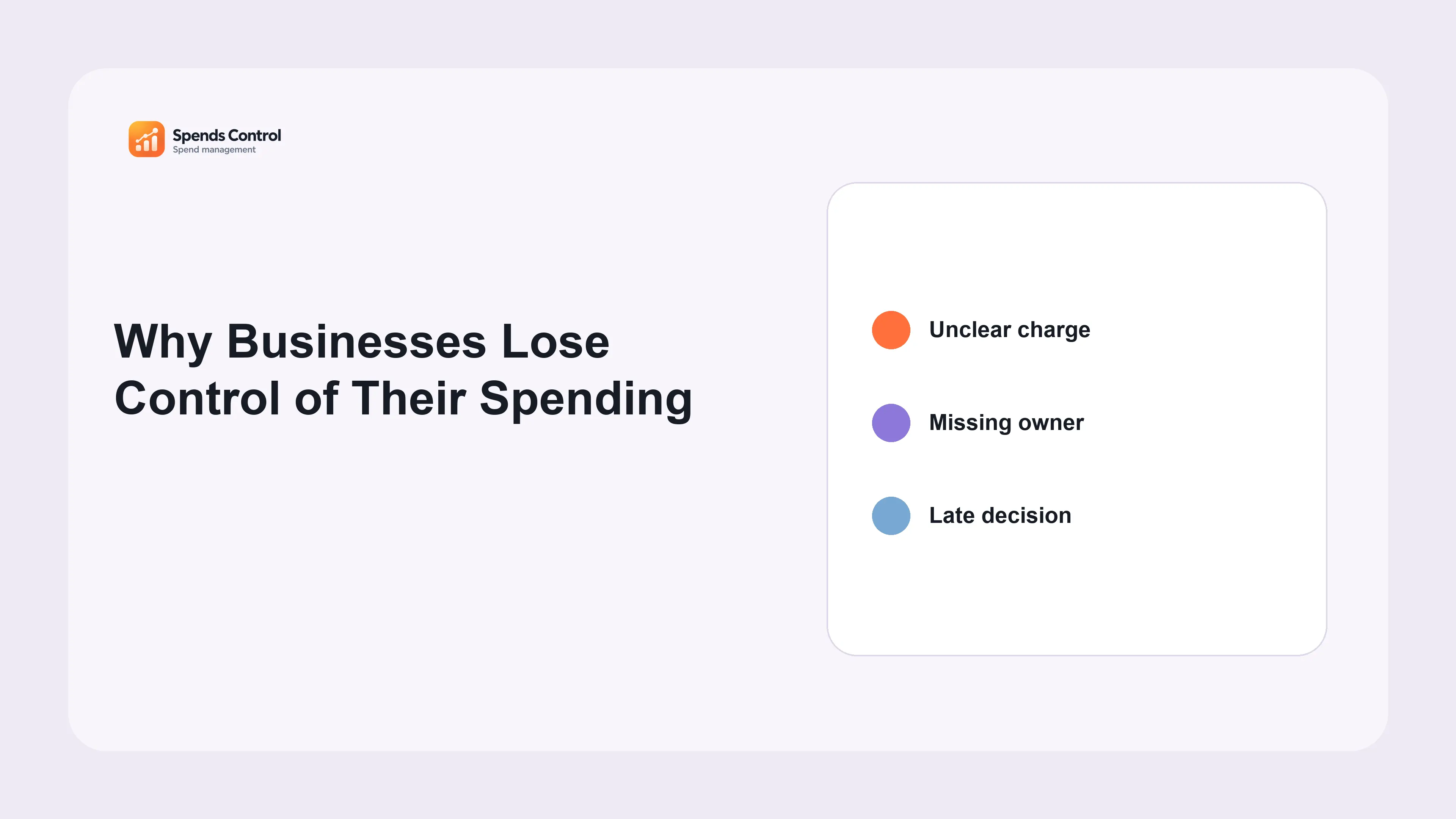
“Small record gaps can become expensive surprises.” Spending problems often start before a large bill appears. A tool loses its owner, a purchase skips review or a renewal date stays in an inbox. When there is no organized routine, these small gaps build up. This guide explains the common causes and what to check first. The aim is to fix how people record and review spending, instead of blaming employees or cutting costs without understanding them.
Spending becomes invisible between separate records
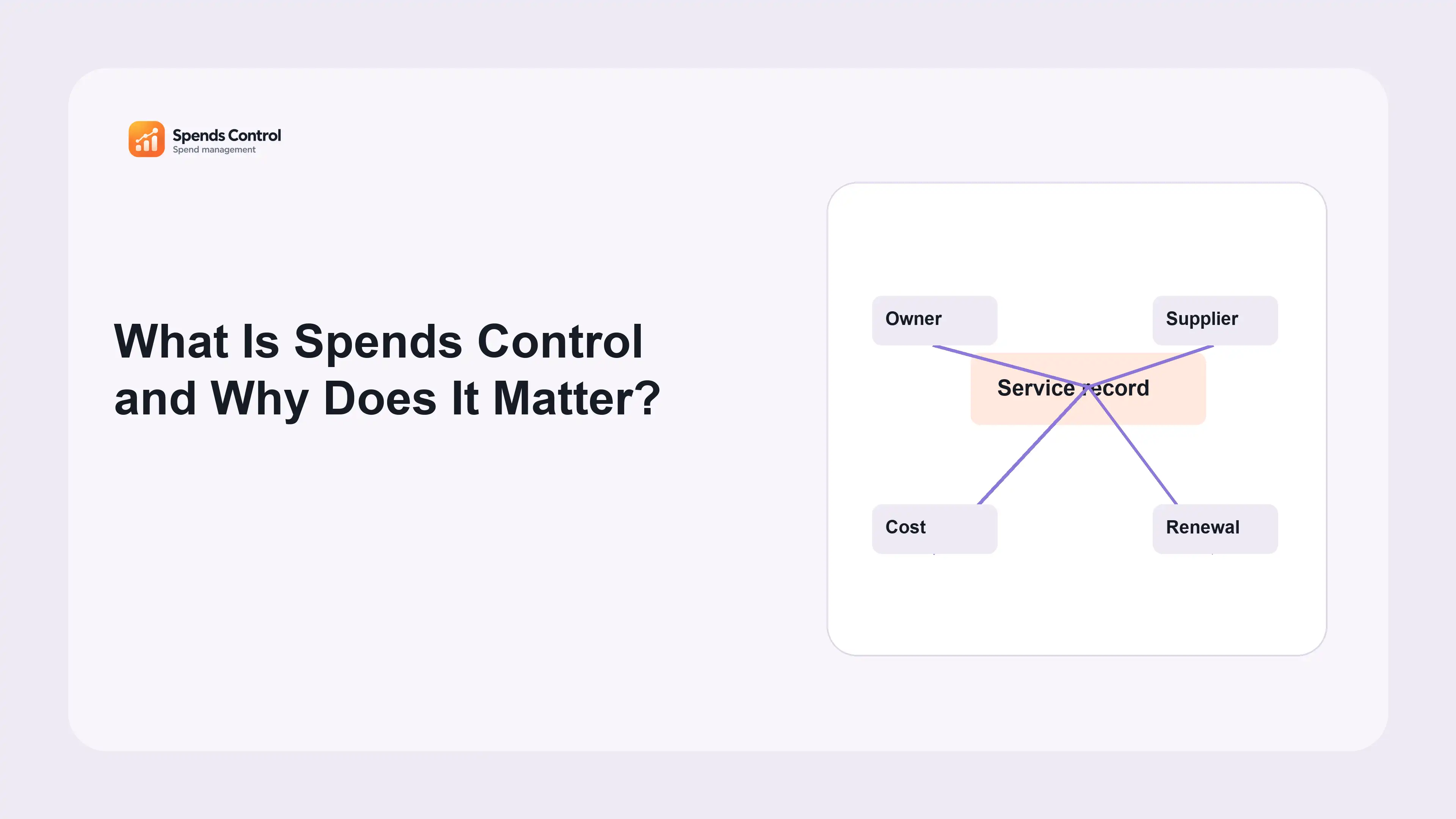
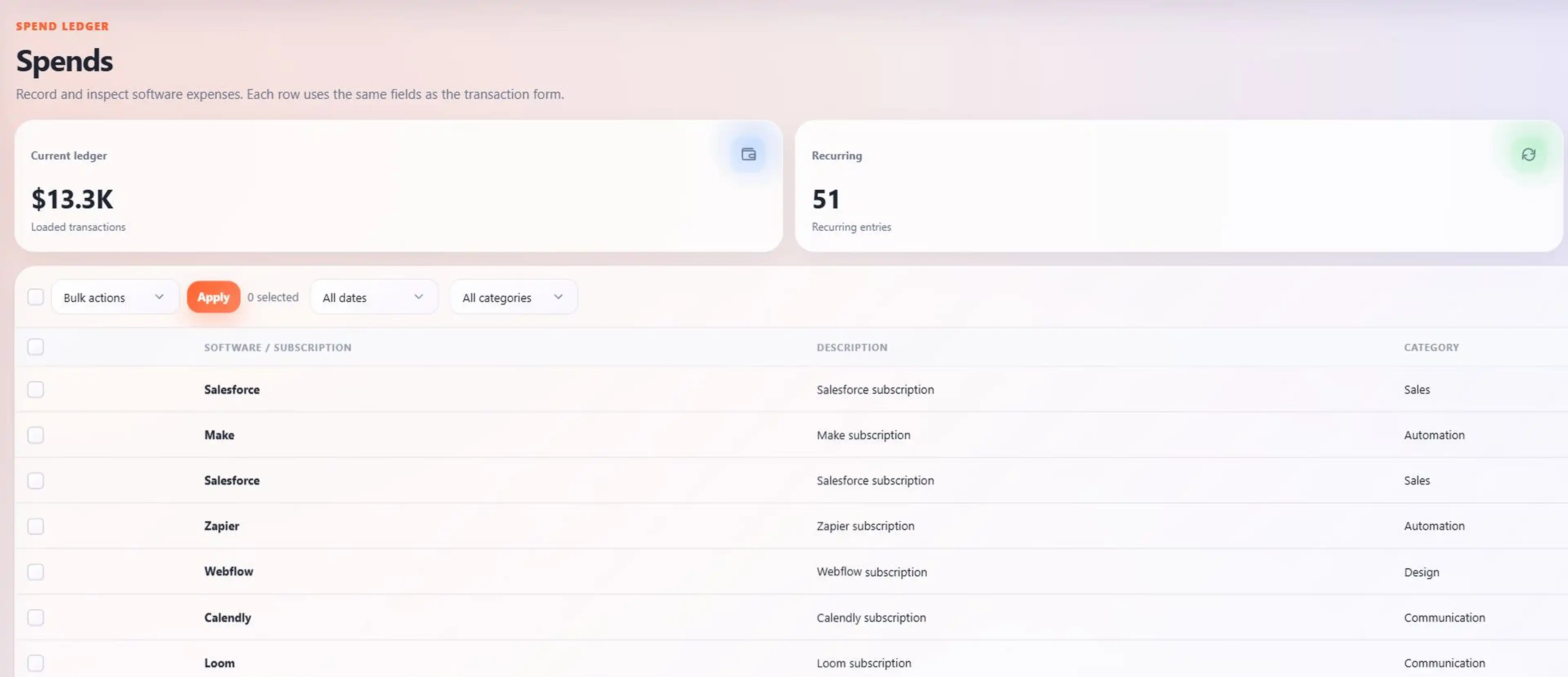
A payment record answers what was charged, but not necessarily why the service exists. The business purpose may be in a request, the supplier terms in a contract and the owner in a manager’s memory. Without a common reference, finance cannot easily connect a cost with the decision that created it.
We recommend starting with clear records and a simple routine. This gap becomes larger when teams use inconsistent descriptions. The same supplier can appear under several names, while monthly and annual costs are mixed in one comparison. A total built from those records may look precise but remain difficult to understand. Consistent fields and visible sources are more valuable than an attractive summary with uncertain inputs.
Begin with the transaction ledger and investigate items that lack context. Connect each large charge with the service, currency, date and person responsible. Keep unresolved items on a review list. Acknowledging an incomplete record gives someone a useful task; guessing its purpose hides the problem and can lead to an unnecessary purchase change.
A practical review checklist
- Find charges with missing service context.
- List ownerless subscriptions and approaching deadlines.
- Assign checking work instead of guessing.
Responsibility does not survive business changes
A service can remain active after its original buyer changes teams or leaves. Colleagues may assume that finance owns it because finance sees the invoice. Finance may assume that the department still manages it. Meanwhile, nobody checks whether the purchased seats or service limits still match the team need or prepares the next renewal decision.
Ownership should mean responsibility for explaining purpose and maintaining current context, not permission to buy anything. An access administrator, service owner and final approver can be different roles. When these distinctions are unclear, a handover either loses useful information or grants more authority than the colleague actually needs.
Make team changes a trigger for reviewing application ownership, permissions and renewal and notice dates. Record the incoming role and open questions before the transition is complete. A reliable handover should explain which services support ongoing work, where the agreement is stored and which decision comes next. It should not expose passwords in general notes.
Decisions happen after the future cost is created
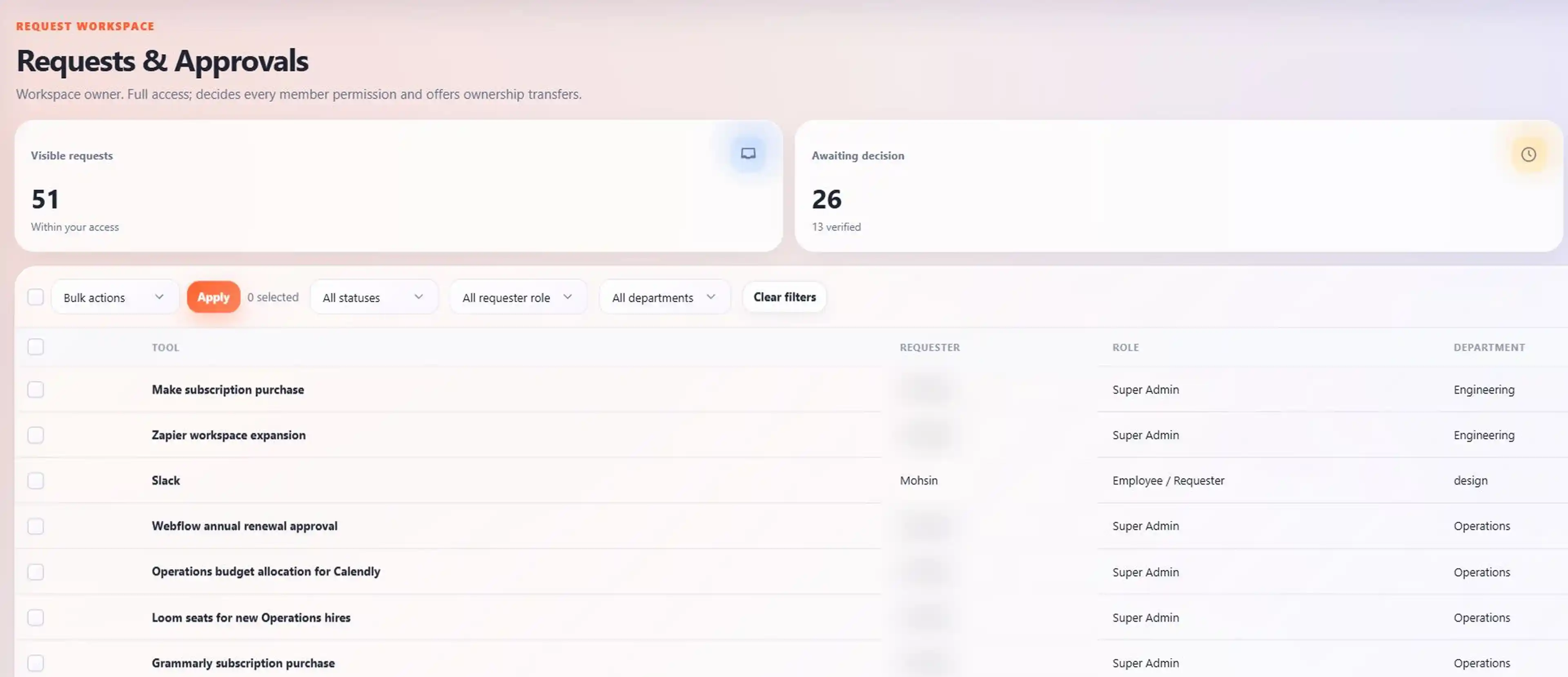
An employee may buy an urgent tool before a reviewer sees its purpose or cost. The business then records approval after the purchase, which does not restore the opportunity to check alternatives before purchase. Repeating this pattern means the company learns about agreed purchases only after it is already responsible for them.
A similar timing failure occurs at renewal. The charge appears, a manager questions value and only then does someone check the cancellation clause. The relevant notice deadline may have passed. That is not simply an expensive tool problem; it is a missing decision calendar and an unclear responsibility for preparing the review.
Requests & Approvals gives proposed spending an earlier record, while Renewals keeps upcoming decision context. Use both with clear team responsibilities. A checked request is not an approved purchase, and a scheduled renewal is not proof that cancellation is possible. Confirm the source terms and authority before acting on either record.
A budget exists but agreed purchases are not reviewed
A business can set a sensible budget amount and still overspend if it compares that budget amount only with completed transactions. Approved purchases waiting to happen may already use the apparent remaining room. If those agreed purchases are invisible, another request can be approved on a balance that no longer represents money available to spend.
At Spends Control, we recommend giving each open task an owner and a review date. Use Budgets to distinguish recorded spending and approved purchases within a defined period. Explain exceptions, annual costs and unresolved inputs. Check how a request becomes a linked transaction so the same future cost is not counted twice. A budget is a decision aid, not a guarantee that incomplete records describe the full position.
Fix the underlying process before setting a more aggressive target. Start with ownerless services, unclear charges and approaching deadlines. Assign actions and review dates, then observe whether surprises become less frequent. The monthly review checklist provides a practical routine for turning business spending problems into a manageable sequence of questions and decisions.
To build on this routine, read our guides to spending warning signs, company spending control and building a spending process. Choose the next topic that matches the problem your team needs to solve.
Frequently asked questions
Does a spending increase always indicate poor control?
No. Growth or an annual payment can raise the total. What matters is whether you can explain the cost and know who approved it.
Why does a clean spreadsheet still produce surprises?
A neat list can still miss renewal dates, planned purchases or the person responsible. Organize those details too, and agree who keeps the list current.
Should employees be blamed for urgent purchases?
First check whether the normal request route was clear and fast enough. A simple urgent-request rule helps people act without hiding the purchase.
What if the problem is poor supplier information?
Write down what is missing and assign someone to ask the supplier. Keep the unanswered questions visible before making a decision.
Which issue deserves attention first?
Start with large unclear charges and decisions with close deadlines. Then organize ownership and updates so the same gaps do not keep returning.