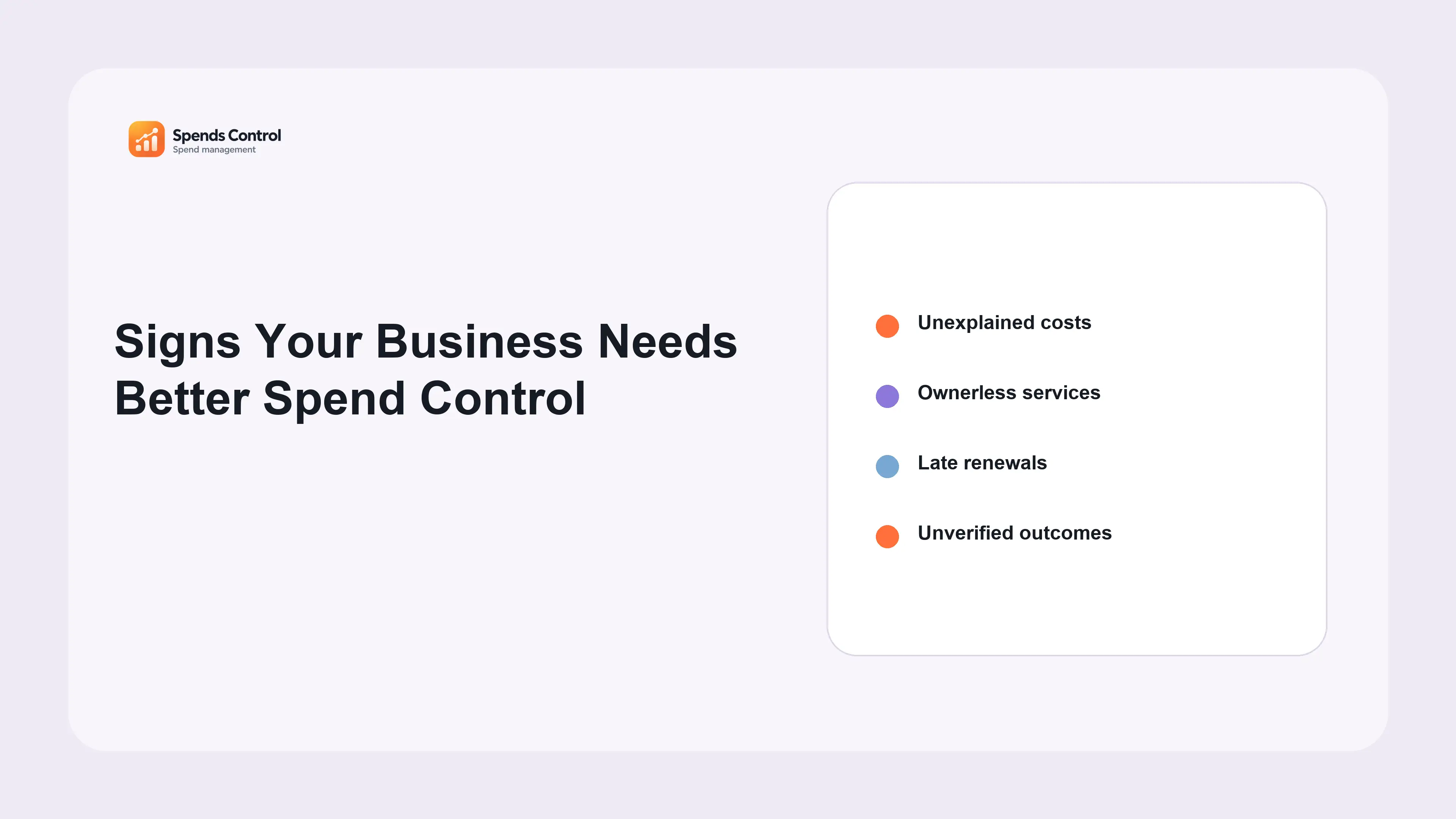
“Control starts with knowing what needs attention.” Your business can be busy and profitable while still losing track of spending details. Unclear charges, ownerless tools and late renewal decisions are warning signs that the routine needs attention. This guide explains what those signs look like and how to review them. An organized system helps you turn each concern into a clear task. The goal is useful action and fewer surprises, rather than cutting every cost.
Your spending questions take too long to answer
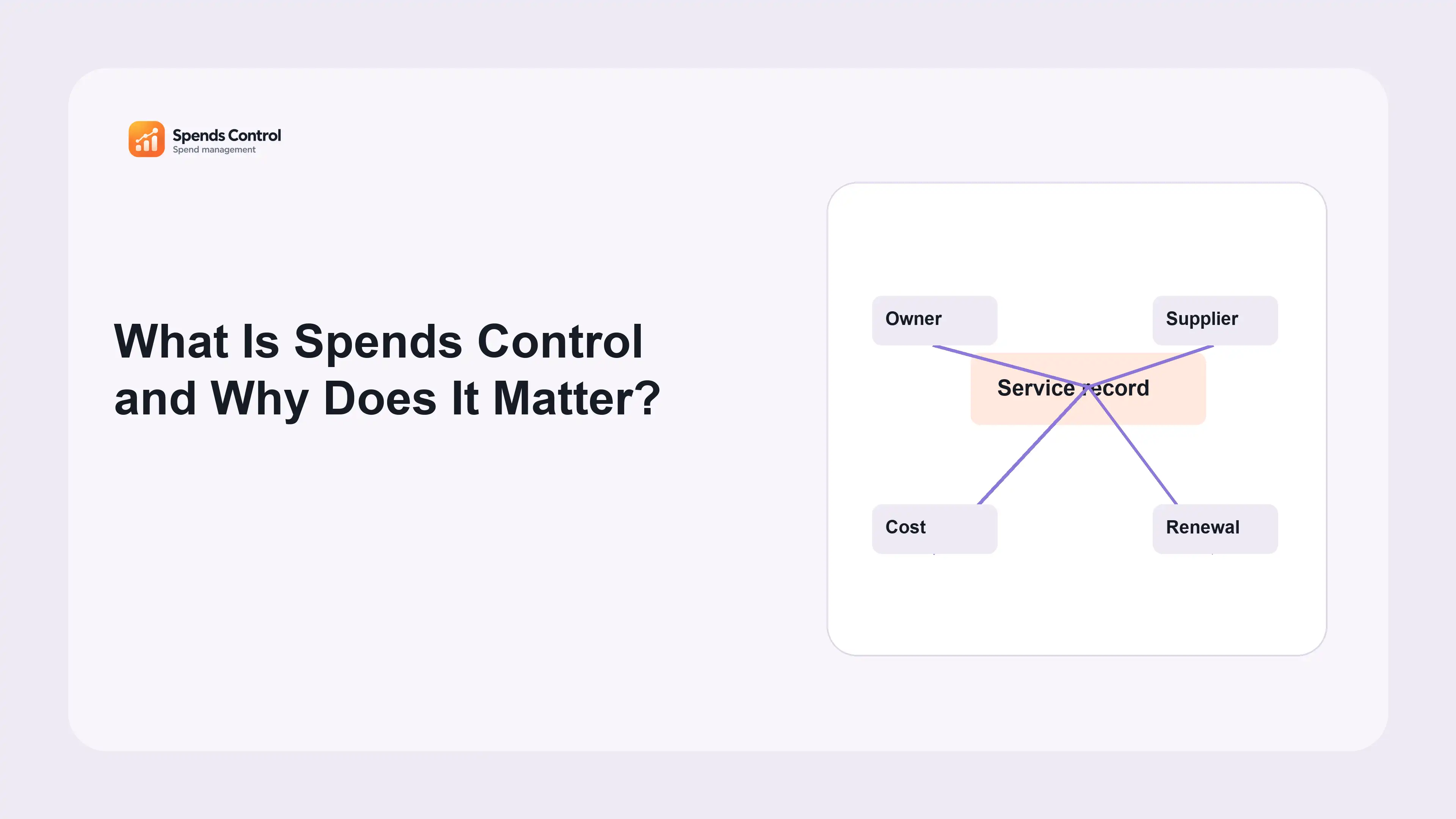
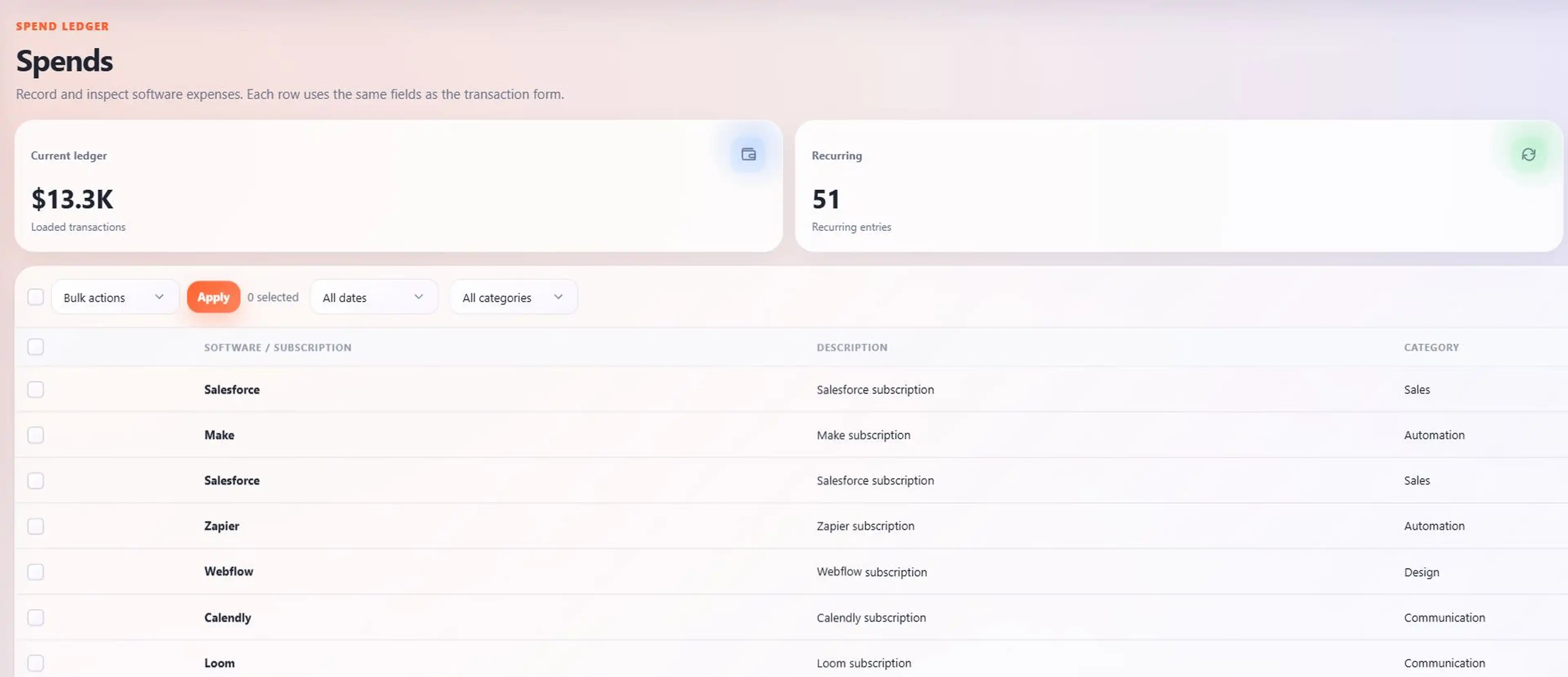
### Unexplained costs keep returning If each review begins by asking what a charge represents, the business lacks a reliable connection between transactions and services. Supplier names alone may not explain the purpose. Check whether the record includes software, date, currency, source and an service owner who can check the business context behind it.
We recommend starting with clear records and a simple routine. ### Totals are clear but their meaning is not A report can show a precise number without distinguishing an annual renewal from regular monthly spending. If managers cannot explain period changes, improve classification and source records before making reductions. The Spends ledger supports investigation; the summary should be the start of a question, not the end of the review.
Colleagues piece together the same story repeatedly
Repeated searches through messages and agreements indicate missing shared context. Record the checked answer where the next reviewer can find it. A useful control improvement is reducing that repeated work, even when the underlying expense is allowed and no immediate monetary saving results from the investigation.
A practical review checklist
- Look for recurring unexplained costs.
- Check whether ownership survives team changes.
- Review decisions arriving after notice deadlines.
Ownership and deadlines become uncertain
### Services remain active after people move A former buyer’s subscription may still support important work, but someone must own its current purpose and next decision. Review application ownership when teams change. Ownerless services are a reason to investigate, not automatic evidence that access should be removed or the supplier contract cancelled.
Renewal decisions start with the invoice
If the first review happens after another charge arrives, the relevant notice deadline may already have passed. Record renewal and cancellation dates from the agreement and assign preparation responsibility. Renewals provides decision context, but the team must confirm terms and authority before treating any proposed change as actionable.
Shared tools have conflicting owners
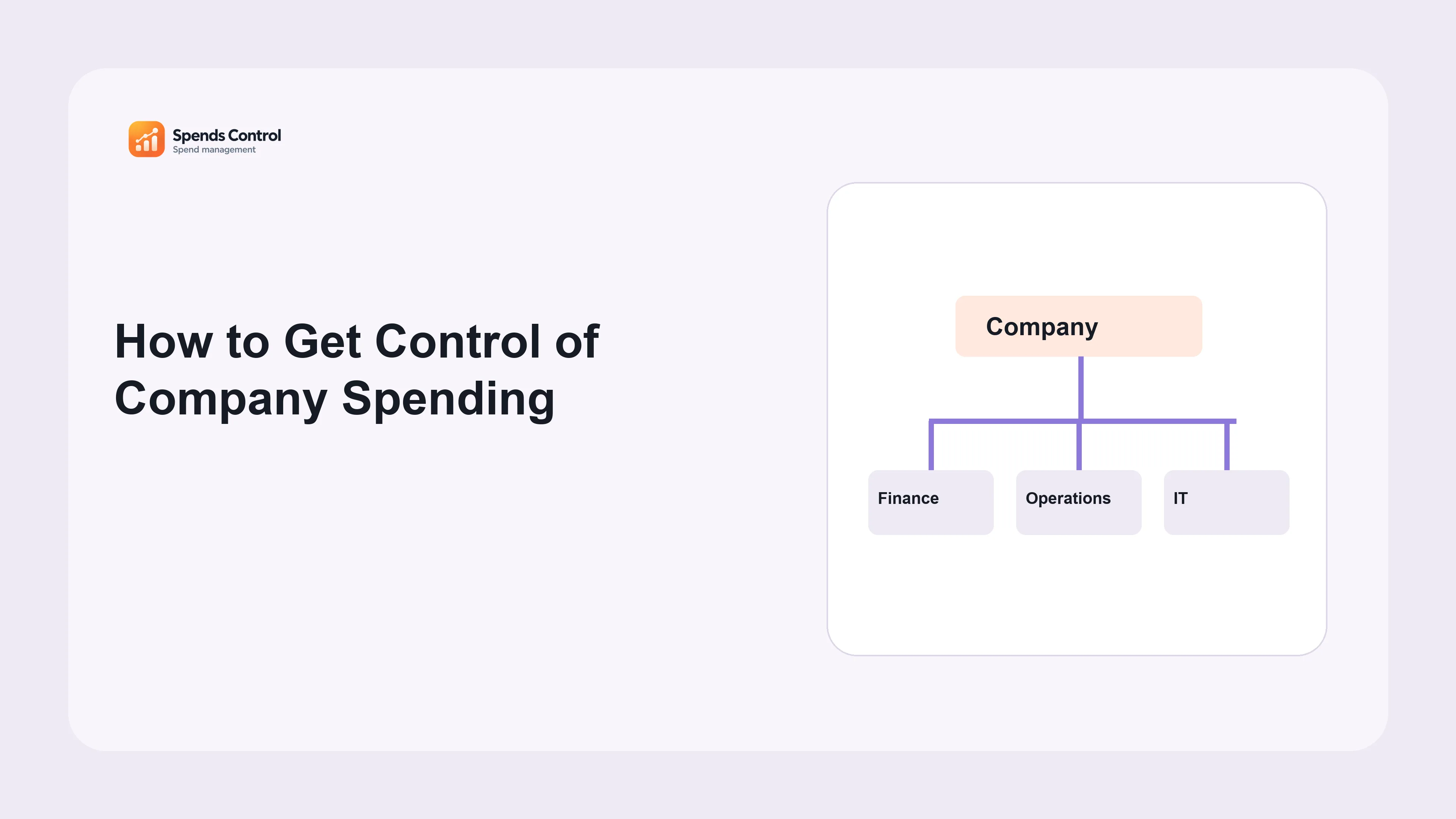
When departments disagree about who can change a shared service, the daily work relationship needs clarification. Identify a coordinating owner and participating teams. Keep administration, budget responsibility and final purchasing authority distinct. This makes handovers and purchase decisions more reliable without unnecessarily centralizing every routine update.
Purchasing and budget decisions do not connect
### Requests rely on informal conversations A proposal may be discussed in several messages without a clear decision or follow-up. Ask whether the business reason, intended users, estimate and required date are recorded. Requests & Approvals keeps that context, helping the requester understand whether the proposal is incomplete, checked, approved or still awaiting authority.
The remaining balance ignores agreed purchases
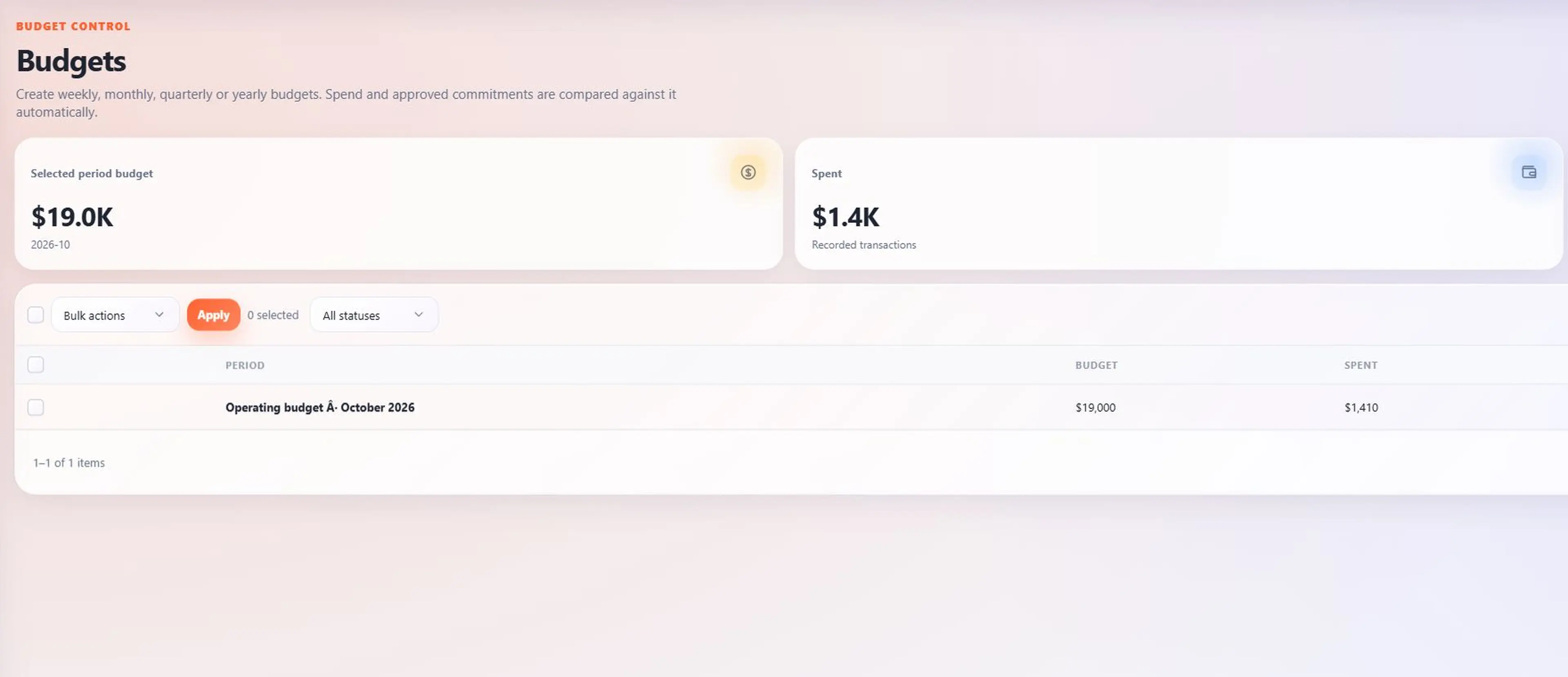
A budget compared only with completed transactions can overstate room for another purchase. Approved requests waiting to happen may already use it. Budgets distinguishes recorded spend and agreed purchases. Review those stages together, making sure an approved estimate and its resulting linked transaction are not counted as separate future costs.
Emergency exceptions become the normal route
Repeated urgent purchases may mean that the standard process cannot meet team needs. Record the reason and approved exception, then investigate the recurring bottleneck. Adding another approval stage will not necessarily solve it. The goal is timely decisions with usable evidence, rather than a process teams continually need to bypass.
Savings claims are stronger than their evidence
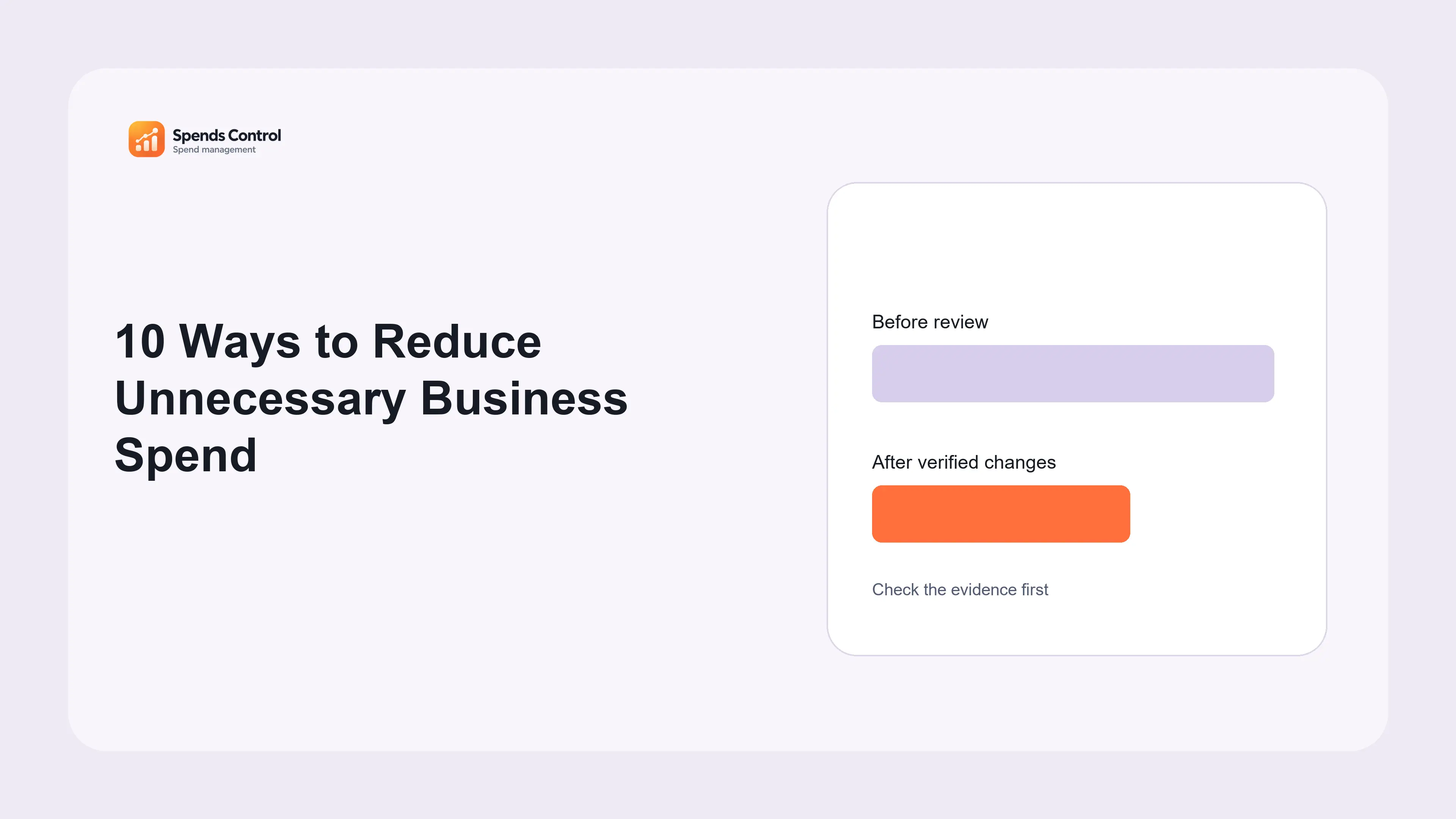
A potential licence reduction is not the same as a confirmed cost change. If reports include estimated opportunities as achieved savings, management can believe improvement has happened while the original agreed purchase remains. Retain the starting figures, approved action and supporting result; Savings keeps potential, committed and realized stages distinct.
At Spends Control, we recommend giving each open task an owner and a review date. Use the signs to prioritize a practical first review. Begin with time-sensitive future costs and material unexplained charges, then address ownership and request quality. Assign a person responsible and date to each open issue. Avoid introducing a large service list project without deciding who will maintain its records afterward.
Assess progress through clearer answers, fewer unresolved items and decisions prepared before deadlines. Spending can legitimately rise as the business grows, so a lower total is not the only measure. The complete Spends Control guide explains the connected tools if these warning signs suggest your team needs a more consistent daily work workflow.
To build on this routine, read our guides to common spending problems, controlling business spending and reducing avoidable costs. Choose the next topic that matches the problem your team needs to solve.
Frequently asked questions
Can a profitable business still have weak spend control?
Yes. Profit does not tell you who owns every tool or which renewal is coming next. Check the records and routine as well as the totals.
Is one unexplained transaction a serious warning?
Check it, but keep the response sensible. A small error fixed quickly is different from repeated unknown charges or a large bill with a close deadline.
What if increased spending is intentional?
Write down why the increase is needed and who approved it. Planned spending can stay under control when its purpose and future costs are clear.
Should every warning sign trigger a software purchase?
No. Start by agreeing who updates records and what information is needed. Then choose a tool that helps your team follow that organized routine.
How do you know the first review worked?
Check whether unanswered questions now have clear answers, owners and next steps. Proposed cuts alone do not show that the process has improved.