“A useful policy tells people what to do next.” A spending policy helps only when people can use it for a real purchase. If the wording is unclear, employees guess and managers keep answering the same questions. This guide shows how to write a simple policy that explains the rules, responsibilities and review steps. An organized policy keeps the current instructions in one place. People can then follow a clear route instead of searching through old messages for permission.
Define purpose and scope before writing rules
Explain what the policy is intended to achieve: approved decisions, understandable records and spending aligned with business needs. Avoid promising that a document will eliminate all waste. Its practical role is to tell colleagues what information they need, who may decide and how the resulting future cost should be maintained.
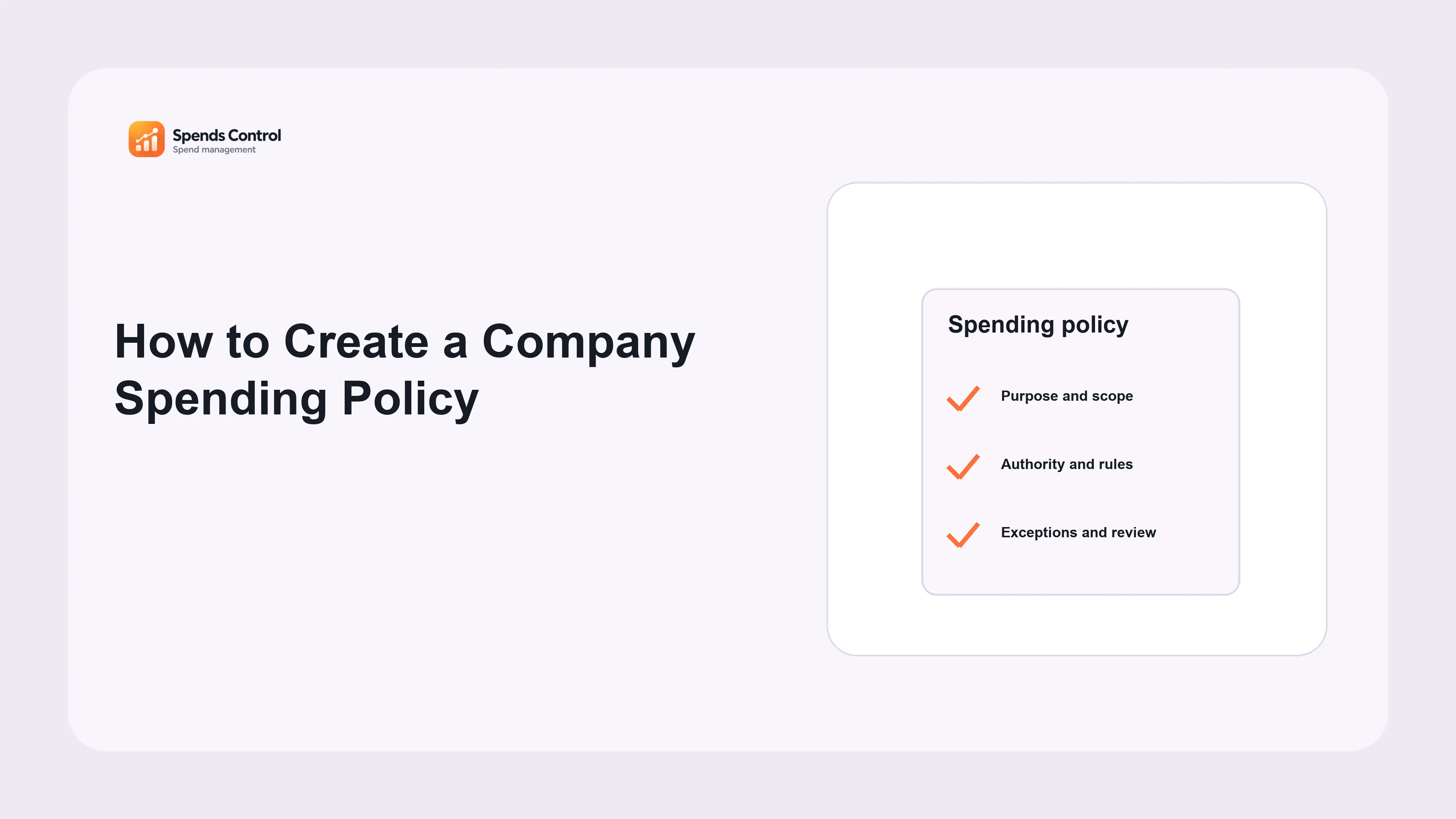
We recommend starting with clear records and a simple routine. List the purchases covered and the people expected to follow the policy. Software, digital subscriptions, supplier services and infrastructure may fit this scope, while payroll or specialist purchases follow other processes. Explain what is not covered and links to related policies. A clear scope prevents readers from assuming one document governs every business purchase.
Identify the policy owner, approval authority, effective date and review responsibility. Keep a version reference so older decisions remain understandable. Start with the expense policy template as a planning aid, adapting it to your company’s actual responsibilities. A generic template should never override agreements, applicable future costs or the authority your business has established.
Describe the purchasing route in plain language
Write what a requester must provide: business purpose, intended users, estimated cost, department and required date. Explain where the request is submitted and how incomplete information is handled. Include a simple example, such as a proposed design subscription, so employees can see what a usable business case looks like.
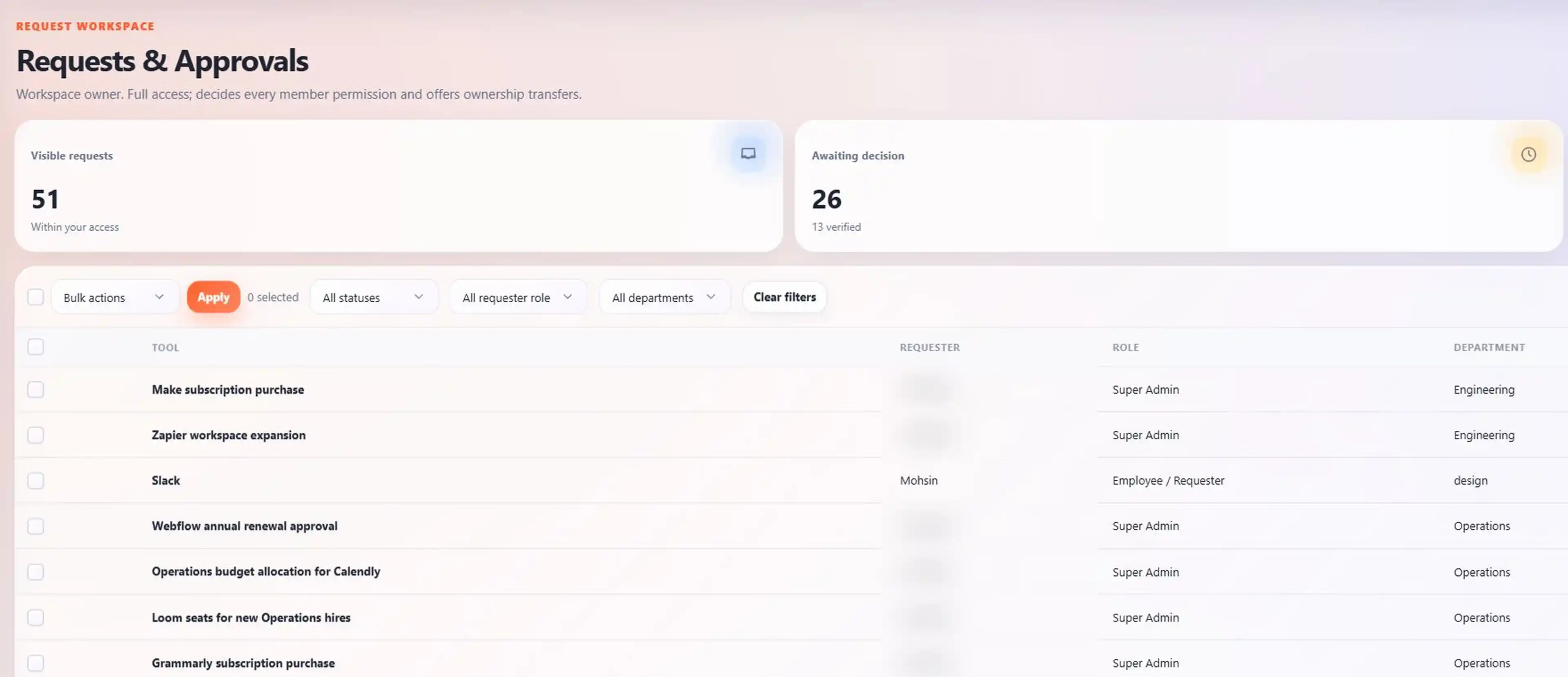
Define information review and final approval separately. In the software workflow, a reviewer can check details while the Super Admin holds final purchasing authority. Align policy language with those actual permissions. Requests & Approvals provides the record for the proposal, status and decision; it should not be described as supporting arbitrary authority that is not available.
Explain what happens after approval. The purchase still needs to be completed, paid for and added to the service records. Approval is not evidence of payment. Require the resulting application, supplier and agreement context to be updated so a later reviewer can connect the business case with the agreed purchase the company ultimately accepted.
A practical review checklist
- Identify the scope and policy owner.
- Explain the request and approval route.
- State exceptions, maintenance responsibilities and review dates.
Set boundaries and an accountable exception route
State how limits are measured: one payment, annual cost or period spending. Explain who checks budget context and what happens when the proposal exceeds a budget. Do not let monthly billing hide a larger recurring future cost. The policy should make the basis of the decision clear rather than leave reviewers to understand the same limit differently.
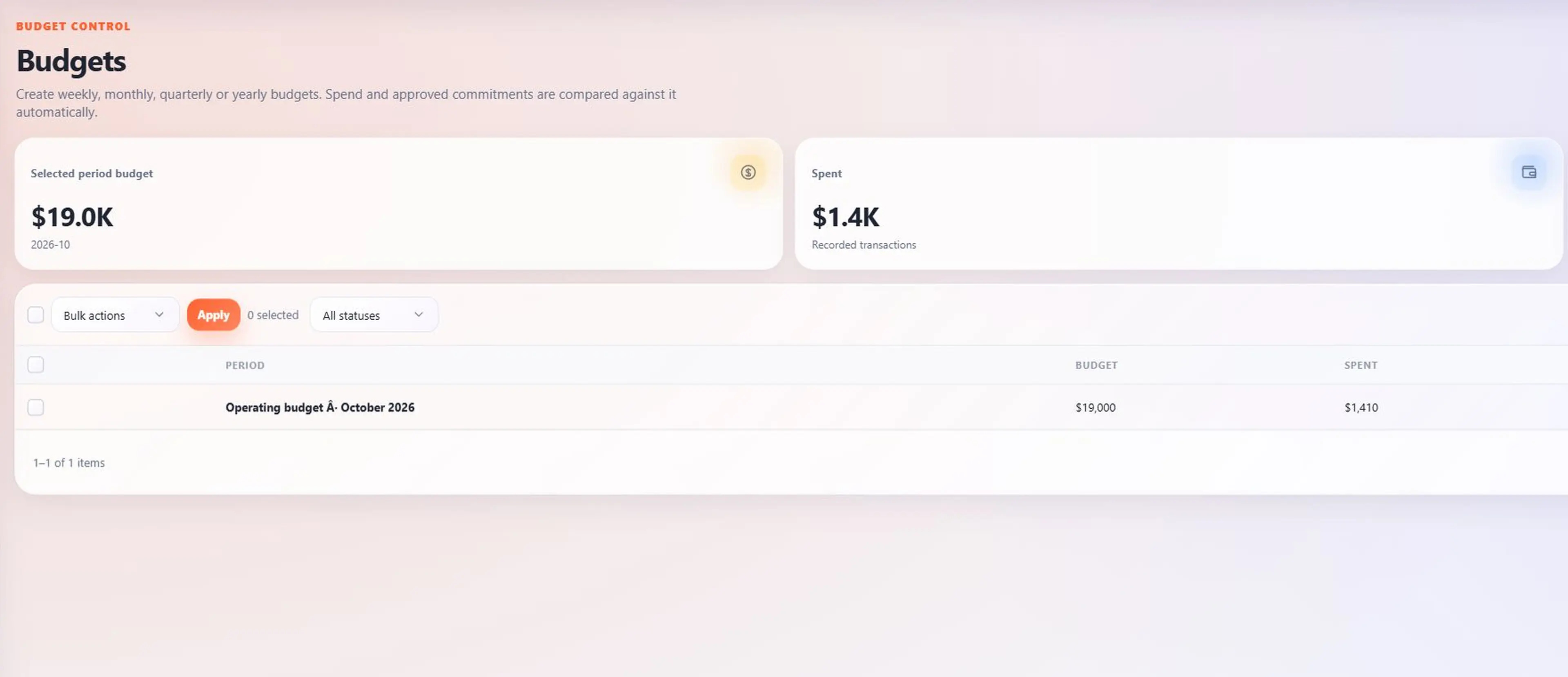
Budgets distinguishes recorded spending from outstanding approved purchases. Require those stages to be understood before another purchase is approved. If internal team budget amounts are tracked separately, define the method and responsibility. A partial or incomplete view should not be presented as proof that sufficient money remains available.
For urgent exceptions, require a reason, named authority by role and follow-up date. Preserve the purchase records and owner even when the normal timetable cannot be followed. Review repeated exceptions to determine whether the ordinary process is too slow or unclear. An exception route should allow necessary work while retaining accountability.
Include maintenance, renewal and review responsibilities
Explain who maintains the service after purchase and which events trigger an update. Team changes, revised pricing, changes in seats or limits and a new agreement can all affect the record. Require renewal and cancellation dates to be checked from source terms, with enough time for the responsible owner to prepare the next decision.
At Spends Control, we recommend giving each open task an owner and a review date. Publish the policy where employees make requests and brief managers on its practical application. Ask readers to test it against a new tool, an urgent request and a shared-service change. Revise ambiguous instructions before rollout. A document that people can use without repeated clarification is more valuable than a long list of impressive sounding restrictions.
Review the policy periodically and after significant changes in daily work. Look at incomplete requests, delays, recurring exceptions and ownerless services. Record changes and their effective dates. The guide to company spending rules provides examples for turning these responsibilities into clear operational instructions while keeping the policy itself coherent and easy to maintain.
To build on this routine, read our guides to clear company spending rules, building a spending process and company spending control. Choose the next topic that matches the problem your team needs to solve.
Frequently asked questions
Should the policy include every supplier term?
No. Link to the current supplier agreement instead. Keep the policy focused on what employees must do and who makes each decision.
Is employee acknowledgment enough to make the policy usable?
No. People need clear examples and an easy place to find the policy. Check a few real requests to see whether the instructions work.
Can the policy cover reimbursements too?
Yes, if you explain the reimbursement steps separately. Do not assume a software purchase request also handles every employee expense claim.
Who should approve a revised policy?
Use the person or group your company has given that authority to. Record the approved version and date so everyone follows the same policy.
How should historical exceptions be retained?
Follow your company record rules. Keep the reason and decision easy to find, but avoid adding personal or sensitive details that are not needed.