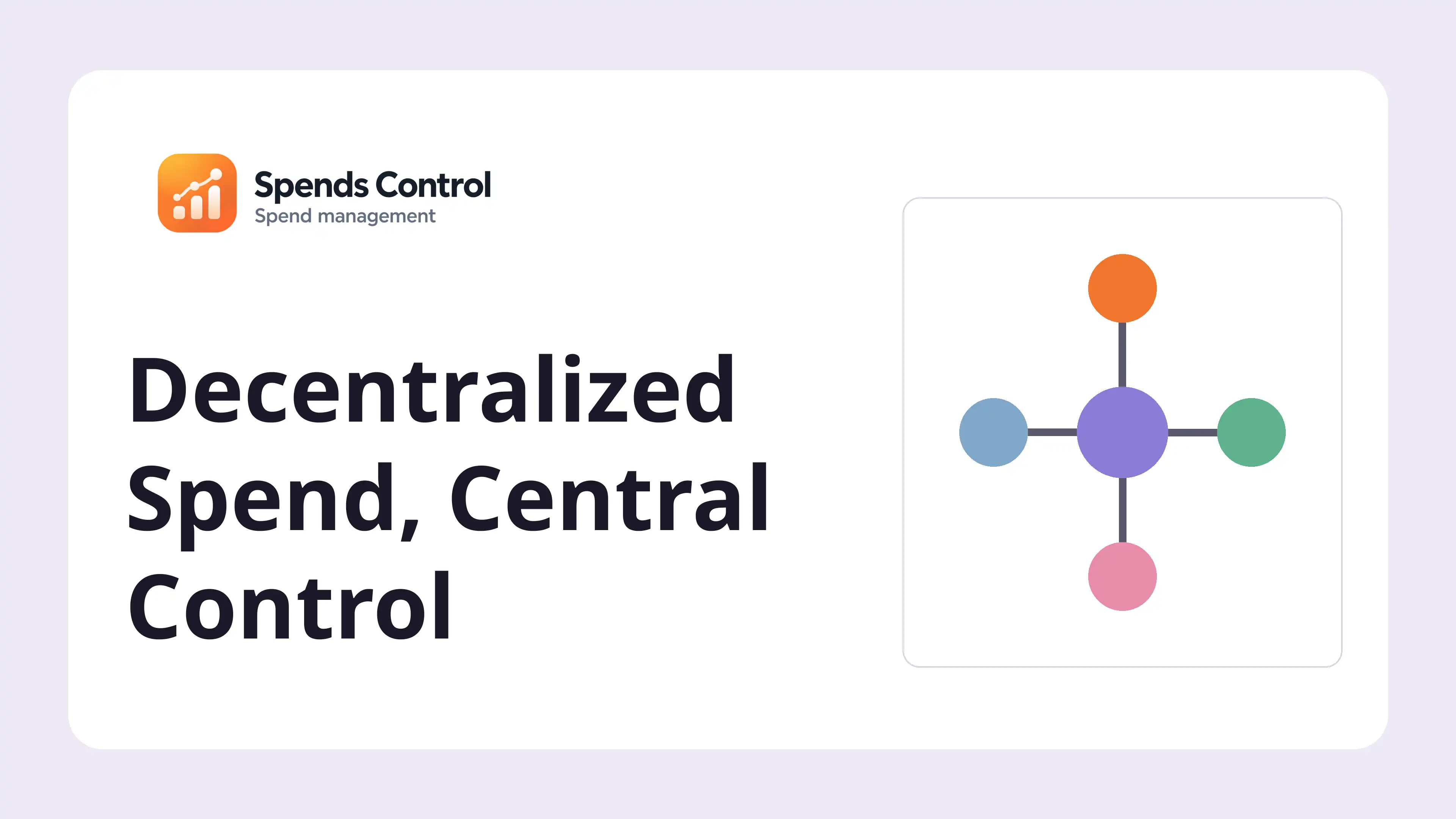
Decentralized spend with centralized control means teams keep buying close to the work, while finance keeps one policy, one set of limits and one shared record for the whole business. It suits companies where central purchasing would be too slow, but free local buying has already created duplicates and surprises. This guide explains the balance, the guardrails that make it safe, and where spend control holds the centre. Speed and oversight stop being enemies in this model.
Key Points
- Local buying stays fast; central rules keep it consistent.
- The centre owns policy, limits and records, not every purchase.
- Guardrails replace approvals for small, routine buying.
- One shared record is the non negotiable part of the model.
- Central review looks at patterns, not single small receipts.
What Sits At The Centre And What Stays Local
The model works when the split is explicit. The centre holds the spending policy, approval limits, supplier standards and the shared record system. Local teams hold the choice of what to buy, which approved supplier to use and when to order. Confusion starts when the centre also tries to hold the buying choice, or when local teams set their own limits.
| Held Centrally | Held Locally | Why |
|---|---|---|
| Policy And Limits | Nothing | One Standard For All Teams |
| Shared Records | Purchase Details | Facts Stay Complete And Central |
| Supplier Standards | Supplier Choice | Speed With Basic Safeguards |
Write the split down in one page and publish it. Company spending rules helps phrase the central rules so local teams can apply them without asking first.
Why Businesses Choose This Balance
Fully central buying creates a queue. Every small order waits for a central buyer who lacks local context, so teams invent workarounds. Fully local buying removes the queue but also removes visibility: finance learns about commitments from invoices, weeks after the decision. The balanced model removes the queue for routine buying and keeps the visibility finance needs.
For example, a branch that needs $140 of parts today should not wait two days for head office approval. It should buy from an approved supplier, inside its cap, and record the purchase the same day. The centre sees the spend in the shared record, not in a month end surprise. Speed and sight can coexist.
Set Guardrails Instead Of Approving Everything
Guardrails are the limits that make local freedom safe. Typical guardrails include a per order cap, a monthly team total, approved categories and a preferred supplier list. Inside the guardrails, the team buys without asking. Outside them, a normal approval applies. The guardrails carry the control, so individual approvals do not have to.
- Set a per order cap that fits routine local buying
- Set a monthly total for each team or location
- List categories that always need prior approval
- Require same day recording for every local purchase
Review guardrail sizes after the first quarter using real purchase data. Department spending limits explains how to size limits around actual decisions.
Keep One Record Even When Buying Is Local
The shared record is what separates this model from simple delegation. Every local purchase lands in the same system with the same fields: what, why, who, supplier, amount and budget. If one team records in a spreadsheet and another in email, the centre has fragments, not a record, and the model fails at the first review.
Make recording the easiest step in the process. If you want local teams to record as they buy, open Spends Control and give each team its own budget view. Budgets updates from the same records approvers and finance read, so nobody maintains a private copy.
Review Patterns Centrally, Not Single Receipts
Central review should study patterns across teams: which categories grow, which suppliers appear in several teams, where guardrails keep being hit, and where one team pays more for the same item. Policing single small receipts teaches teams that the centre distrusts them, and recording quality drops. Pattern review teaches that the centre is paying attention to the system.
Use the monthly management report format for this review: totals by team and category, exceptions, and agreed changes. Change a guardrail when the pattern justifies it, and announce the change with the reason. Teams accept tighter limits more easily when they have seen the pattern that caused them.
Roll The Model Out Team By Team
Do not switch every team on the same day. Start with one team that buys often and keeps decent records. Set its guardrails, connect its budget and run the model for a month. Fix the friction points: unclear categories, caps that stall routine work, record fields nobody can complete quickly. Then extend to the next team with the lessons included.
A staged rollout also builds proof. When the pilot team shows clean records and no slowdown, other teams adopt the model with less resistance. Team spending control gives the coordination routine that keeps several local teams aligned once the model spreads.
Know When To Pull A Decision Back To The Centre
Local freedom depends on the centre retaining the right to intervene in defined cases. Pull a decision back when a purchase creates a long commitment, when several teams need the same supplier, when a local price looks far above the standard, or when a category has produced repeated exceptions. The trigger list should be short, written and known to local teams in advance.
Intervention is a review, not a punishment. The centre checks the case against the pattern, decides with the local context included, and records the outcome. If interventions become frequent in one team, the guardrails for that team probably need resizing. Occasional intervention protects the model; constant intervention means the model has quietly become centralised again.
How Much Freedom Is Too Much
Freedom is too much when a local decision can surprise the whole business: a contract whose term outlasts the team's budget, a supplier whose failure would stop other teams, a purchase that sets a precedent others will copy expensively. Those decisions belong near the centre regardless of amount, because their consequences are shared even when their cost is local.
Freedom is too little when local teams queue for permission on routine purchases they understand better than the centre does. The symptom is delay: work waiting on approvals for items inside budget and inside category. The cure is rarely more approvers; it is wider guardrails with better reporting, so the centre watches patterns while teams keep their pace.
Treat The Centre As A Service, Not A Police Force
The centre earns cooperation by being useful: supplier terms negotiated once for everyone, market prices checked before a team renews, categories and templates maintained so local buying starts from good defaults. When teams experience the centre as help, they bring decisions to it early. When they experience it only as refusal, they bring decisions late or not at all.
Publish what the centre offers and the response times it promises. An approval route with a stated answer window is a service. The same route with silent delays is a toll booth. The balance this model promises depends on trust, and trust is built from the centre's behaviour as much as from the teams'.
Onboard Each New Team Deliberately
New teams adopt the model well when someone teaches it as a benefit rather than announcing it as a restriction. Walk the team through the guardrails, the shared record and the renewal list, then hand them a first month of light supervision: the centre reviews their requests quickly, answers questions fast and corrects records kindly.
After the first month, the team moves to the normal rhythm. Skipping the teaching month saves a week and costs a quarter, because the team invents its own version of the rules from whatever it first experiences. The model scales through this onboarding, one team at a time, which is slower than a company wide memo and far more durable.
A Worked Example Of A Local Decision Done Right
A regional team needed event equipment for a client launch, quoted at $2,300 by a local supplier. Inside their guardrails, they could buy without asking. They recorded the request anyway, because the record takes a minute, and the record is what let the centre notice that two other teams had rented the same equipment that quarter.
The centre did not reverse the purchase; it used the pattern. Three rentals at similar prices justified one shared purchase and a group booking arrangement for future events. The team kept its speed, the business gained the insight, and nobody's decision was second guessed. That is the model working exactly as designed: local judgement, central learning.
Review The Guardrails Themselves Once A Year
Guardrails age. Prices rise, teams grow, and a limit that was sensible two years ago quietly becomes the reason local managers split purchases or queue for routine approvals. Once a year, the centre should review every guardrail against the year's records: which limits generated the most exceptions, which categories produced surprises, which teams consistently bought well inside the lines and could hold wider freedom.
Adjust in both directions without embarrassment. Wider guardrails for a team with a clean year are a reward that costs nothing and buys real goodwill. Tighter ones for a category that kept surprising the group are a repair, announced with the evidence that justifies them. A model whose rules visibly learn from its own records keeps the consent of the teams it governs.
Measure Whether Local Teams Trust The Model
The model survives on consent, and consent can be observed. Requests arriving early is trust. Records completed the same day is trust. Teams bringing a borderline purchase to the centre before deciding is trust. The opposite signals are equally legible: purchases discovered at invoice stage, private spreadsheets, renewal dates nobody entered because the calendar felt like surveillance.
Ask team leads directly once or twice a year what the centre could do faster or stop doing entirely. The answers are usually small and practical: an approval window kept, a category renamed, a report nobody reads retired. Acting on two or three of them visibly is the cheapest maintenance the central team will ever perform on the whole arrangement.
Final Verdict
Decentralized spend with centralized control keeps buying fast and oversight real. The centre holds policy, limits and the shared record; local teams hold the buying choice inside clear guardrails. That split is the whole design, so protect it when pressure builds.
Set guardrails for one team and run the model for a month. Spends Control gives each team a budget view while finance keeps the central record, which is exactly the balance this approach needs.
Frequently Asked Questions
Is Decentralized Spend The Same As No Control?
No. Teams buy locally inside central policy, caps and a shared record. The centre controls the framework and reviews patterns, even though it does not approve every purchase.
What Guardrails Matter Most For Local Buying?
A per order cap, a monthly team total, approved categories and same day recording cover most risk. Add a preferred supplier list where duplicate buying keeps appearing.
When Should A Local Purchase Still Need Central Approval?
When it breaks a guardrail: above the cap, outside approved categories, a new supplier, or a commitment that runs beyond the current budget period. The exception proves the guardrail is working.
How Does Finance Keep Visibility Without Approving Everything?
Through the shared record and pattern review. If every purchase is recorded the same day with standard fields, finance can review totals, categories and exceptions without touching each transaction.
Which Team Should Pilot Decentralized Buying First?
Choose a team that buys frequently and already keeps reasonable records. Early success with a cooperative team proves the model before you extend it to harder cases.